



Tips for Interpreting Line Movement in Preakness Stakes Odds 2025
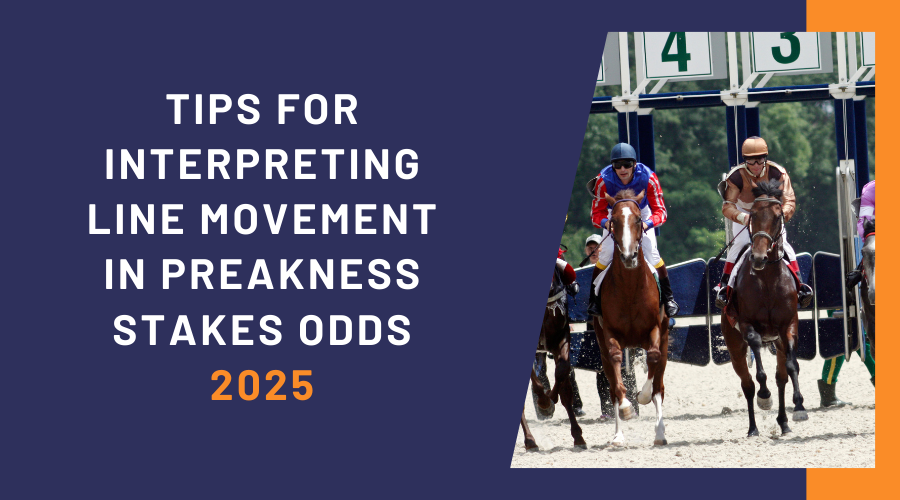
At Pimlico Race Course in Baltimore, the 2025 Preakness Stakes is offering more than just a showcase of top-tier horse racing—it’s revealing key insights through betting line movement. This year’s race, set against the backdrop of an open field and the absence of the Kentucky Derby winner, has bettors paying close attention to shifting odds. These changes reflect how the market reacts to evolving information, public sentiment, and wagering trends. For those placing bets, understanding when and why the lines move provides a clearer picture of the race dynamics and helps sharpen wagering decisions in a wide-open contest.

$250 in Free Bets

$750 Bonus - Tons of Betting Options

150% Bonus - Reduced Juice
Why Odds Move in the First Place
All betting lines are dynamic. They reflect more than just a bookmaker’s initial estimate—they evolve in real time in response to money placed, information released, and even media speculation. In the days leading up to the Preakness Stakes, shifts can happen quickly. An early favorite might drift due to a poor workout, or an overlooked contender might surge after a strong gallop or jockey announcement. Recognizing the cause of a line movement is the first step toward interpreting it accurately.
Some moves are driven by sharp money—bets placed by experienced, high-stakes players who influence how sportsbooks adjust pricing. Others come from public sentiment, which can skew odds based on popularity rather than form. Understanding the source of movement can help bettors determine whether a shift reflects meaningful information or simply emotional momentum.
Opening Lines Are Not Final Truths
When odds are first released, they’re not predictions—they’re starting points. These opening prices often come before final declarations, draw positions, or track condition updates. Because of this, early line movement is frequently speculative. It reflects anticipated scenarios more than confirmed details.
In the case of the 2025 Preakness Stakes, early lines may be especially volatile. With no Triple Crown bid and no obvious front-runner, bookmakers are working with less clarity. That can lead to wide spreads early and more drastic swings later. Bettors would be wise to watch how prices react in the first 24 hours after the post position draw. Those shifts often signal where informed money is landing.
Watch the Market After Key Announcements
Line movement often accelerates after a key update—such as the post position draw, rider changes, or training reports. For example, a horse drawing the rail at Pimlico might see its odds shorten if that position favors its style. Conversely, a horse known to dislike tight turns might see a drift after being assigned an outside gate.
The market responds quickly to this information, but not always rationally. Sometimes, an overcorrection occurs, and value emerges shortly after. That’s why timing matters. Bettors who study how past races reacted to similar developments can spot patterns and assess whether the market is reacting with logic or emotion.
Don’t Chase Movement—Understand It
One of the most common errors is blindly following where the money is going. A line shortening significantly does not always mean a horse is more likely to win—it means more people are betting on it. That could be driven by hype, not substance.
Interpreting line movement means weighing all relevant context. Recent improvement in performance, a switch in jockey or trainer, or a surface change that suits a horse’s running style can all justify a shift. Without a logical explanation, though, following the crowd can be a mistake. Pricing reflects more than public consensus—it reflects value. A wager is only worth placing when the potential return outweighs the risk.
Look at Movement Across Multiple Books
Smart bettors don’t just track a single odds board. They monitor fluctuations across multiple sportsbooks to identify discrepancies and trends. A price drop at one outlet may not appear elsewhere right away, and those gaps can create opportunity.
Reputable online betting platforms like FanDuel often update their lines rapidly in response to sharp betting activity. Comparing those shifts with other operators can offer insight into where informed money might be landing. If several books adjust a price simultaneously, that may reflect collective confidence based on new information—such as trainer comments, post draw results, or weather forecasts.
Monitoring multiple boards allows for more complete context and helps reduce the risk of overreacting to a single market move.
Late Movement Is Often the Most Telling
While early shifts are speculative, the most accurate odds usually appear close to post time. That’s when final workouts are complete, weather is known, and sharp money arrives. Late line movement, particularly within the final two hours before the race, tends to reflect the most accurate consensus.
Bettors who want to capitalize on these late shifts must be ready to act quickly. Watching the tote board in real time or using online tools that track movement allows you to stay ahead of sudden pricing changes. In a year like 2025, with no heavy favorite to anchor the board, expect these final moves to be especially volatile—and potentially profitable.
Use Movement to Gauge Public Bias
Sometimes, line movement reveals less about the horses and more about the bettors. Popular names, flashy connections, or memorable prep performances can create artificial steam. When a well-known horse shortens despite no major news, it may be due to brand appeal rather than performance data.
Recognizing these trends allows savvy bettors to go the other direction. If public bias inflates a horse’s popularity, another contender’s odds may drift—despite being more competitively positioned. These are the moments where disciplined wagering pays off. Let the crowd take the flashy name while you find the undervalued rival quietly building momentum.
Combine Line Analysis With Race Dynamics
Line movement is only part of the equation. It must be paired with real race insight—pace setup, jockey strategy, trainer intention, and how a horse fits the race shape. A late odds drop for a closer might look appealing, but in a field lacking speed, that horse could struggle to make up ground. Context matters.
Evaluating movement effectively means understanding whether a horse is positioned to capitalize on the race structure, whether they’re adaptable to changing pace scenarios, and whether the trainer tends to time form peaks for this stage. These factors add depth to line interpretation and help steer wagers away from surface-level analysis.


Chat
Rules
The goal of chat is to talk sports and sports betting! Help each other by sharing picks and having a good time!
Below will not be tolerated
You can chat about most things to a certain extent. Exception is absolutely NO talking about Religion or Politics.
- There will be NO talking about others or their families
- There will be NO name calling.
- There will be NO rambling on or repeating the same thing over and over.
- There will be NO racist or sexist comments.
- There will be NO posting of other websites.
Basically treat others the way you would like to be treated.
Break the rules

- 1st warning a 24 hour ban
- 2nd warning 7 day ban
- 3rd warning a lifetime ban
Follow us on:


Copyright © 2025 www.streakforthecash.com
